

Black Bears in Connecticut Are Eating Grapes and Entering Homes
Bears and humans are increasingly getting in each other’s way, presenting problems for both species.
The number of human-bear conflicts has risen sharply from 531 in 2015 to 3,756 in 2025, according to a March report from the state’s Department of Energy and Environmental Protection. While a vast majority of reported conflicts involve the animals getting into trash cans or bird feeders, home entries by bears are more common in Connecticut compared with other states in the Northeast, the report said. So far this year, the agency has documented more than 60 home entries across 20 municipalities.
People were excited about the bears about 15 years ago, said Jason Hawley, a wildlife biologist at the agency, “but as the population has been allowed to grow uncontrolled, I’ve seen public sentiment change toward a very negative mind-set.”
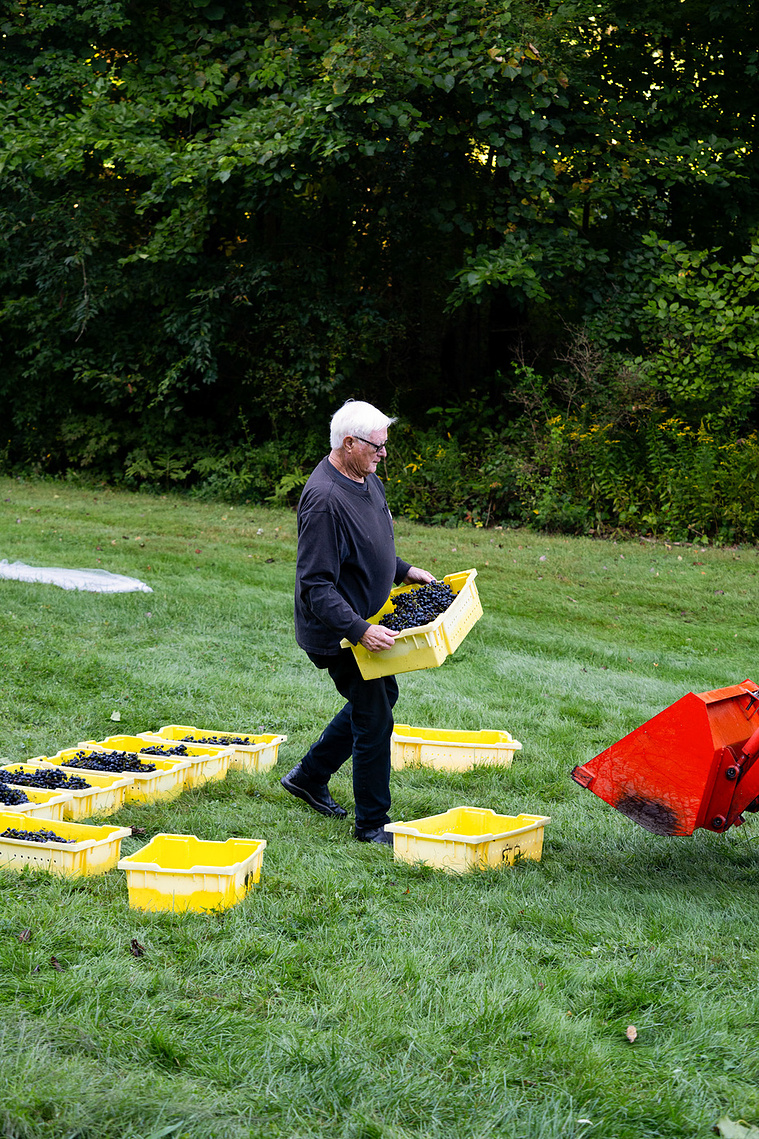
Last year, four black bears destroyed Mr. Frey’s crop of red grapes, and he has been on a campaign to stop the animals ever since. Mr. Frey said he didn’t mind seeing the bears after harvest, “I just don’t want them eating my grapes.”


It is not clear how many black bears are in the state, which is conducting its first black bear population study in over a decade. In 2012, researchers estimated there were between 1,000 and 1,200 bears in Connecticut.
Connecticut’s bears might choose to spend an entire autumn day beneath stands of white oak and black cherry trees, feasting on acorns that fall on the forest floor. Or they might find their food by scavenging roadkill or preying on small mammals or deer.
But when higher calorie, more plentiful human-provided food is accessible, like trash and agriculture, the state’s environmental agency has seen a rising number of bears seize the opportunity for an easy meal.
Bambi Gambino, the co-owner of Country Eatery in Woodbury, said that this year bears began making a mess of the restaurant’s trash more frequently, so the landlord put a metal chain on the dumpster. Brita Lombardi, of Washington, Conn., purchased a bear-resistant garbage can this year after the bears began visiting her home every week. “They’re fearless,” she said.


For Mr. Frey, of Walker Road Vineyards in Woodbury, the solution to the bear problem appears to be noise. He turned to noise machines after other methods, including electric fencing, failed or proved unfeasible.
This year, he and his son also patrolled the vineyard with a 12-gauge shotgun, not to hunt the bears, but to shoot blanks and make noise when the animals were active. “The bears, I’m sorry, aren’t afraid of us anymore,” he said.
By the time Mr. Frey’s grape harvest arrived in mid-September, he hadn’t seen a bear in weeks.


